

The best hair styling tool is not necessarily the most powerful or the one with the most attachments. It is the one that suits your hair type, your usual routine and the look you are actually trying to create.
Fine hair may need a completely different approach from thick or coarse hair. Curly hair can require different heat and tension than straight hair, while color-treated hair often benefits from more conservative temperature settings.
Here is how to choose between thermal brushes, straighteners, curling tools, steam stylers and hot-air brushes without buying more tools than you need.
Start With Your Hair Type
Before choosing a styling tool, think about the characteristics of your hair rather than only the style you want.
Consider:
- Hair thickness
- Density
- Natural texture
- Length
- Porosity
- Whether it is color-treated
- How easily it holds a style
- How much heat it can comfortably tolerate
These factors can make the same styling tool work beautifully for one person and feel frustrating for another.
Fine Hair Usually Needs Less Heat
Fine strands can be more vulnerable to excessive heat because each individual strand is smaller.
A tool with several temperature settings is especially useful because it allows you to start lower and increase only when necessary.
For fine hair, repeated passes at very high temperatures are rarely the best strategy.
Thermal Brushes Can Work Well for Fine Hair
A thermal brush can add lift and smoothness without flattening the hair as much as some straightening irons.
The round shape can also make it easier to create movement through the ends and volume near the roots.
Thick Hair Benefits From Efficient Tools
Thicker hair often takes longer to style because there is more hair to work through.
Larger barrels, stronger airflow and tools that can handle slightly larger sections may reduce styling time.
Sectioning the hair is still important. Taking overly large sections often leads to repeated passes, which can expose the same strands to more heat than necessary.
Coarse Hair May Need More Heat, Not Maximum Heat
Coarser strands can sometimes require higher temperatures to change shape effectively, but that does not mean the tool should automatically be set to its maximum.
Use the lowest temperature that creates the desired result with a reasonable number of passes.
Curly Hair Depends on the Goal
The right tool for curly hair depends largely on whether you want to preserve the natural curl pattern, stretch it, smooth it or create a completely different curl shape.
A diffuser may be appropriate when preserving texture, while a straightening brush or hot-air styler may make more sense when the goal is smoothing and elongation.
Wavy Hair Is Especially Flexible
Wavy hair can often work with several categories of styling tools.
A thermal brush may emphasize volume, a curling tool can create more defined waves and a straightener can produce a smoother finish.
The most useful tool is often the one that requires the least manipulation to reach the desired result.
Color-Treated Hair Needs More Caution
Coloring and chemical processing can make hair more vulnerable to dryness and breakage.
Lower temperature settings, fewer passes and consistent heat protection can be especially important.
If your hair is already dry or fragile, prioritize tools with adjustable temperature rather than relying on one fixed high-heat setting.
Choose a Thermal Brush for Soft Volume
Thermal brushes are ideal when the goal is a polished blowout-style finish rather than pin-straight hair.
They can help smooth the surface while keeping movement through the lengths and ends.
Thermal Brushes Are Not the Same as Hot-Air Brushes
A thermal brush uses a heated barrel but generally does not blow air.
A hot-air brush combines airflow with a brush or barrel, allowing it to dry and style at the same time.
That distinction matters because the hair usually needs to be dry before using a thermal brush, while many hot-air tools are intended for damp hair.
Use a Straightening Brush for a Softer Straight Finish
A straightening brush can be a good option for people who want smoother hair without the very flat finish created by a traditional flat iron.
The brush format can also be faster for people with medium-to-long hair who prefer to work through larger sections.
Steam Styling Offers a Different Experience
Steam straightening tools combine heat with controlled moisture while styling.
Some people prefer the feel of steam-based styling to conventional dry heat, particularly when using a brush-style tool.

Follow Steam Tool Instructions Carefully
Steam devices may have specific requirements for the type of water used and how the reservoir is filled.
Using the wrong water or overfilling can affect performance and create mineral buildup.
Flat Irons Give the Sleekest Finish
A traditional straightener is usually the best choice when the goal is very smooth, straight hair with less volume.
Plate width matters too. Narrow plates are useful around shorter pieces and roots, while wider plates can be faster on long, thick hair.
A Straightener Can Also Create Waves
Many flat irons can create bends and waves when rotated as they move through the hair.
This can make a straightener more versatile for someone who only wants to own one heated styling tool.
Curling Irons Offer More Consistent Curl Shape
A traditional curling iron gives you deliberate control over curl size and placement.
A smaller barrel creates tighter curls, while a larger barrel creates looser bends and waves.
Curling Wands Create a More Relaxed Finish
Curling wands do not use a clamp, so hair wraps directly around the barrel.
This can create a softer, less uniform curl pattern.
They can take a little more practice because your fingers work closer to the heated barrel.
Automatic Curlers Can Simplify the Process
Rotating or automatic curling tools reduce some of the wrist movement required by conventional curling irons.
They can be useful for people who struggle to wrap hair evenly around a barrel.
Multi-Barrel Sets Offer More Variety
If you regularly switch between tight curls, loose waves and larger bends, a set with interchangeable barrels may be more practical than owning several separate irons.
The tradeoff is that there are more attachments to store and manage.
Hot-Air Stylers Can Replace Multiple Steps
A hot-air styler combines drying and styling in one routine.
Depending on the attachments, one tool may dry the roots, smooth the lengths, add volume and create curls or waves.
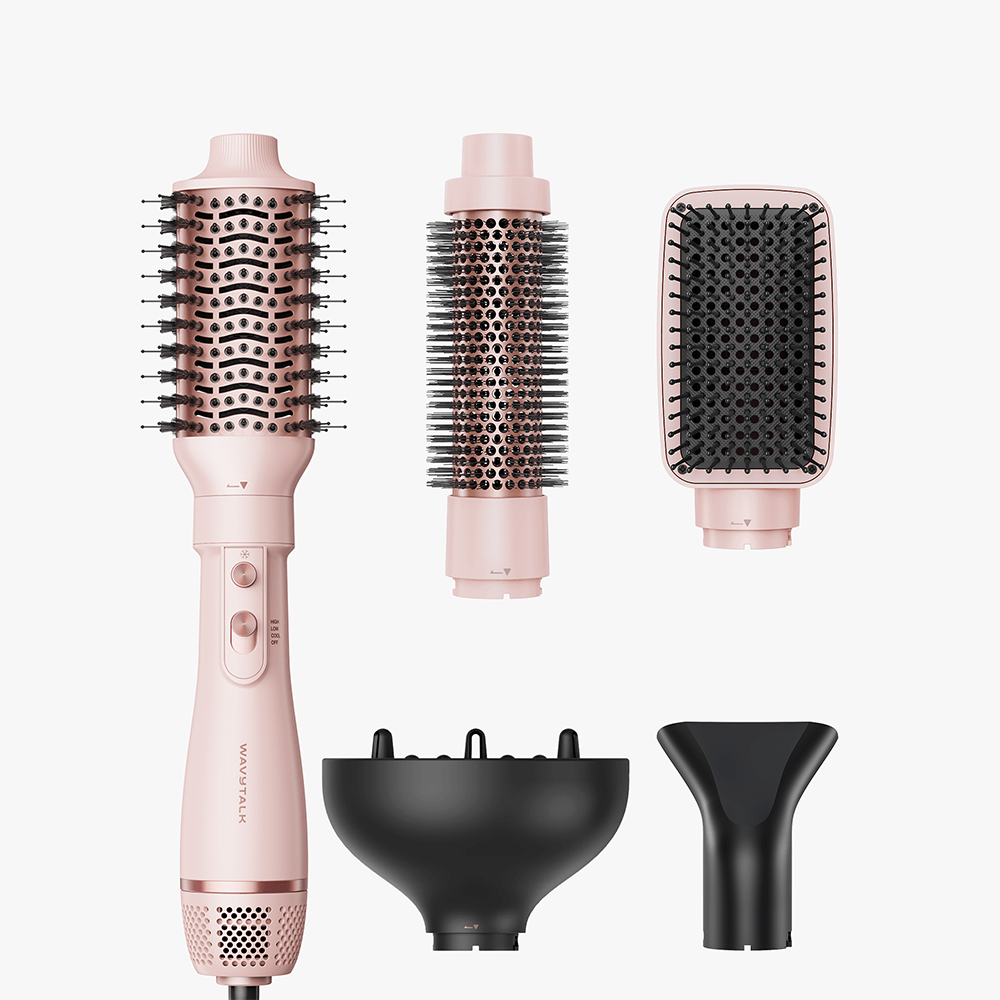
Multi-Stylers Are Best for People Who Use the Attachments
An all-in-one tool only provides value if you actually use several of its functions.
If you always wear your hair straight, a dedicated dryer and straightener may be simpler than storing five attachments.
If you regularly change styles, the flexibility can be worthwhile.
Hot-Air Brushes Work Best on Damp Hair
Hair should generally be partially dried before using many hot-air brush tools rather than starting with soaking-wet hair.
This can shorten styling time and reduce how long the hair is exposed to heat and tension.
Do Not Use a Dry-Hair Tool on Wet Hair
This is one of the most important distinctions between styling tools.
Traditional straighteners, curling irons and many thermal brushes are intended for dry hair.
Unless a product is specifically designed for wet-to-dry use, fully dry the hair first.
Think About Barrel Size
Barrel size should relate to both hair length and desired shape.
Short hair generally works more easily with smaller barrels, while long hair can wrap more naturally around larger barrels.
Large Barrels Create Softer Movement
Larger round brushes and curling barrels are generally better for creating broad curves, loose waves and blowout-style volume.
Small Barrels Create More Definition
Smaller barrels create tighter curls and can also be easier to maneuver around short layers or face-framing pieces.
Tool Weight Matters More Than It Seems
A styling tool that feels comfortable for two minutes may become tiring during a 20-minute routine.
If you have long or thick hair, tool weight and balance can make a noticeable difference.
Pay Attention to Handle Shape
A comfortable grip makes it easier to maintain control without squeezing excessively.
This is especially important for rotating tools and round brushes that require repeated wrist movement.
Cord Length Can Affect Convenience
A short cord can be frustrating if the bathroom outlet is far from the mirror.
Swivel cords can also make curling and rotating motions easier by reducing tangling.
Temperature Control Is Worth Prioritizing
Several heat settings are more useful than an extremely high maximum temperature.
Adjustability lets you match the heat to your hair rather than forcing every hair type to use the same setting.
Start Lower Than You Think
Begin with a moderate temperature and see whether it creates the result you want.
If it does, there is no benefit in increasing the heat simply because the tool can go hotter.
Use Fewer Passes
Repeatedly running a hot tool over the same section can increase heat exposure quickly.
Good sectioning and an appropriate temperature should allow the tool to work efficiently.
Heat Protection Is Part of the Styling Routine
Heat-protectant products can help reduce some of the stress associated with thermal styling.
Apply according to the product directions and allow wet products to dry appropriately before using tools that require dry hair.
Do Not Overload the Hair With Product
Too much styling product can make hair heavy, sticky or difficult to move through heated tools.
Use enough to provide the desired protection and hold without coating the hair excessively.
Sectioning Makes Styling Faster
Trying to style too much hair at once often creates uneven results.
Dividing the hair into manageable sections usually saves time because each pass can be more effective.
Start With the Lower Layers
Clipping the upper hair away allows you to work systematically from the bottom toward the top.
This prevents already-styled sections from becoming tangled with unstyled hair.
Let Curls Cool Before Brushing
Freshly curled hair continues to set as it cools.
If you want the curl to last, allow it to cool before brushing or separating it aggressively.
For Loose Waves, Brush After Cooling
Once curls are fully cool, gently brushing or separating them can create a softer, more relaxed wave.
Fine Hair May Need Smaller Sections
Although fine hair can be quicker to style, smaller controlled sections may help create volume and prevent the hair from slipping away from the tool.
Thick Hair Needs Strong Sectioning
Thick hair becomes much easier to manage when divided into several layers.
This helps heat and airflow reach each section more evenly.
Curly Hair May Benefit From Pre-Stretching
If the goal is a smooth blowout, gently stretching curly hair during the drying stage can reduce the amount of straightening needed afterward.
This may allow you to use fewer high-heat passes later.
Preserving Natural Curl Requires Different Tools
If you want to preserve rather than straighten curls, a diffuser attachment may be more appropriate than a smoothing brush.
Use lower airflow where possible to reduce disruption of the curl pattern.
Humidity Affects the Final Result
A style that looks smooth indoors may react differently outside in humid weather.
People living in humid climates may benefit from styling products designed for humidity control rather than simply adding more heat.
Do Not Keep Re-Styling Throughout the Day
Repeated touch-ups can quietly add a lot of heat exposure.
Whenever possible, create the style once and use lower-heat or non-heat methods for minor adjustments later.
Clean Styling Tools Regularly
Hair products, oils and dust can build up on plates, barrels and brushes.
Once the tool is unplugged and completely cool, clean it according to the manufacturer’s instructions.
Remove Hair From Brush Tools
Hair trapped around bristles can interfere with airflow and make the tool harder to clean over time.
Remove loose hair regularly once the device has cooled.
Keep Air Intakes Clear
Dryers and hot-air stylers rely on unrestricted airflow.
Check removable filters and intake areas periodically and clean them according to the manufacturer’s directions.
Let Tools Cool Before Storage
Do not place a hot straightener, curling iron or thermal brush directly into a drawer or enclosed bag.
Allow it to cool fully first.
Do Not Wrap the Cord Tightly Around the Tool
Tightly winding a cord around the body of a styling tool can place unnecessary stress on the connection point.
Store cords loosely whenever possible.
Think About Travel Before Buying
If you travel frequently, size and weight may matter almost as much as styling performance.
A compact multi-styler may replace several separate tools in a suitcase.
Check Voltage for International Travel
Do not assume a styling tool can be used internationally simply because a plug adapter fits.
Check whether the exact model supports the destination voltage.
A Plug Adapter Does Not Convert Voltage
A travel adapter only changes the plug shape.
If the tool is not designed for the local electrical voltage, an adapter alone does not make it safe to use.
Choose According to Your Most Common Style
If you wear your hair in a blowout most days, prioritize a thermal or hot-air brush.
If you mainly wear it straight, choose a straightening tool.
If curls and waves are your usual style, invest in the barrel size and curling format that matches that look.
Do Not Buy for the Style You Rarely Wear
A sophisticated multi-styler may be appealing, but it is unnecessary if you only use one attachment.
The best tool is usually the one that simplifies the routine you already have.
One Good Tool Can Be Better Than Five Average Ones
A carefully chosen styling tool can cover more than one function.
A straightener may also create waves. A thermal brush may smooth and add volume. A multi-styler may replace a dryer and several curling tools.
For Fine Hair
A good starting point may be a lightweight thermal brush or adjustable straightener that works effectively at lower temperatures.
Prioritize control over maximum power.
For Thick Hair
Consider larger styling surfaces, stronger airflow and tools that allow efficient sectioning.
A powerful hot-air styler or wider straightener may reduce overall styling time.
For Wavy Hair
Thermal brushes and multi-stylers can be especially versatile because they allow you to either enhance movement or smooth it depending on the day.
For Curly Hair
Choose based on whether you want to preserve, stretch or completely change the natural texture.
No single tool is ideal for all three goals.
For Color-Treated or Fragile Hair
Prioritize adjustable heat, fewer passes and a gentle technique.
A tool that performs well at moderate temperatures may be more useful than one known mainly for extreme heat.
For Short Hair
Smaller barrels and narrower styling surfaces are generally easier to control around short sections and roots.
For Long Hair
Long hair may benefit from larger barrels, longer plates and tools that can handle larger sections efficiently.
For Frequent Travelers
Compact dimensions, storage cases, fewer attachments and appropriate voltage compatibility should all be considered.
For Beginners
A simple brush-style tool may have a shorter learning curve than a traditional curling wand or flat iron used for waves.
Ease of use matters if a complicated tool ends up staying in the drawer.
Know When to Replace a Tool
Stop using a styling tool if the cord is damaged, the housing cracks, the temperature becomes inconsistent or plates and barrels no longer function correctly.
Electrical hair tools should not be repaired casually at home.
The Right Tool Should Make Styling Easier
Your styling routine should not require fighting with the device every morning.
If a tool constantly snags hair, feels too heavy, runs too hot or takes too long to create the desired result, it may simply be the wrong format for your hair.
Explore Different Hair Styling Tools
We feature Wavytalk hair styling tools on Blue Sky Luxury Living, including thermal brushes, steam straightening tools and multi-styler systems designed for different hair types and routines.
Choose for Your Hair, Not the Trend
The most popular styling tool is not automatically the best one for you.
Start with your hair type, identify the style you wear most often and choose the simplest tool that can create that result comfortably.
A tool that works well with your natural texture and routine is far more valuable than one with a long feature list you rarely use.