
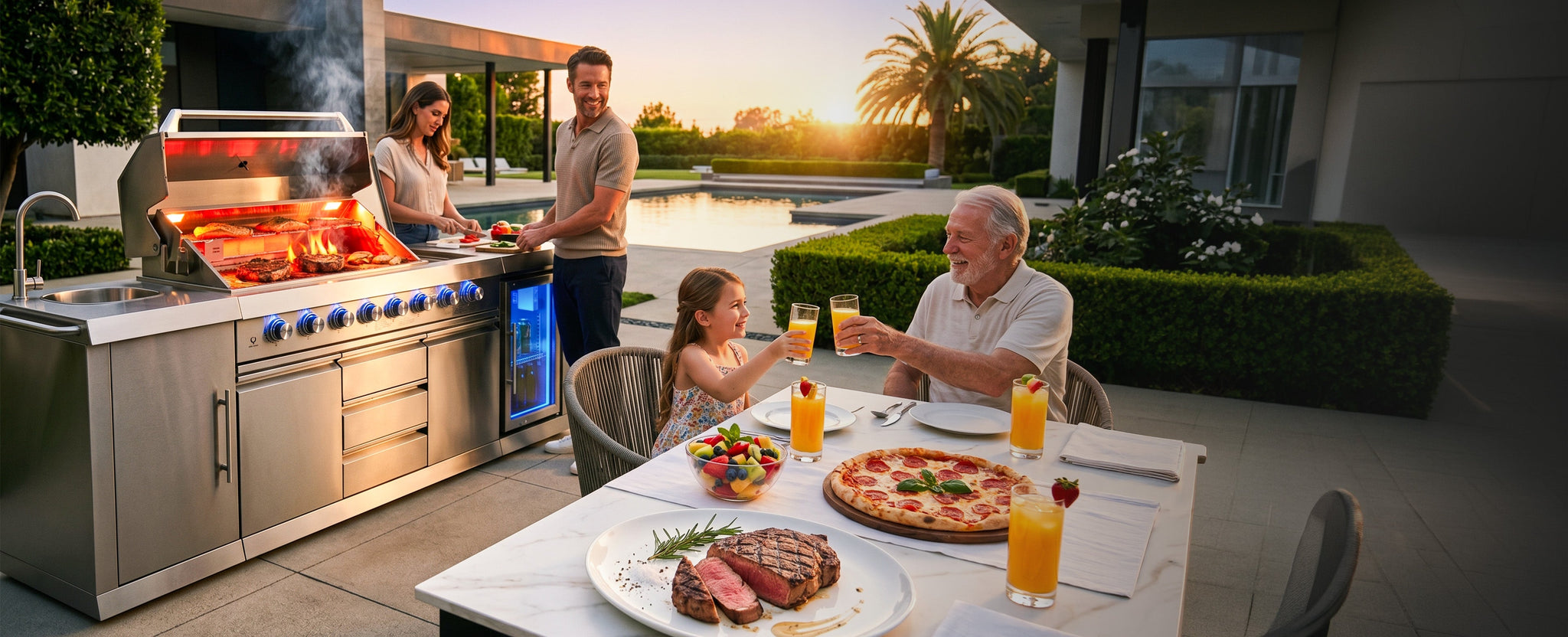
An outdoor cooking space does not have to be enormous to be useful. What matters more is how easily you can move between cooking, preparation, serving and entertaining.
A beautiful grill or pizza oven may be the centerpiece, but the spaces people actually enjoy using tend to get the practical details right too: enough counter space, sensible storage, comfortable circulation and a layout that keeps the cook connected to everyone else.
Whether you are planning a compact patio setup or a full outdoor kitchen, these are the decisions worth making before buying equipment.
Start With How You Actually Cook
It is easy to design an outdoor kitchen around how you imagine entertaining rather than how you really cook.
Before choosing appliances, think about what you make most often.
If most weekends involve burgers, vegetables and grilled fish, a great grill may deserve the largest share of the budget. If homemade pizza is a regular family event, a pizza oven may be more valuable than a long row of rarely used appliances.
Choose the Main Cooking Appliance First
The primary cooking appliance establishes the working center of the space.
Depending on your habits, that might be:
- A gas grill
- An infrared grill
- A live-fire grill
- A pizza oven
- A griddle
- A combination of two cooking methods
Choose this piece before finalizing counters, storage and seating so the rest of the layout can support it properly.
Think About Fuel Before Layout
Different appliances need different fuel arrangements.
A gas grill may require propane storage or a permanent natural-gas connection. A pellet or wood-fired oven needs safe fuel storage. Electric appliances need appropriately rated outlets.
Planning fuel after cabinetry and surfaces are installed can turn a simple project into a complicated one.
Give the Grill Room to Work
A grill needs more than enough physical space to fit.
You also need comfortable room to open the lid, access controls, place food nearby and move around the appliance without squeezing between furniture and hot surfaces.
Put Prep Space Beside the Cooking Area
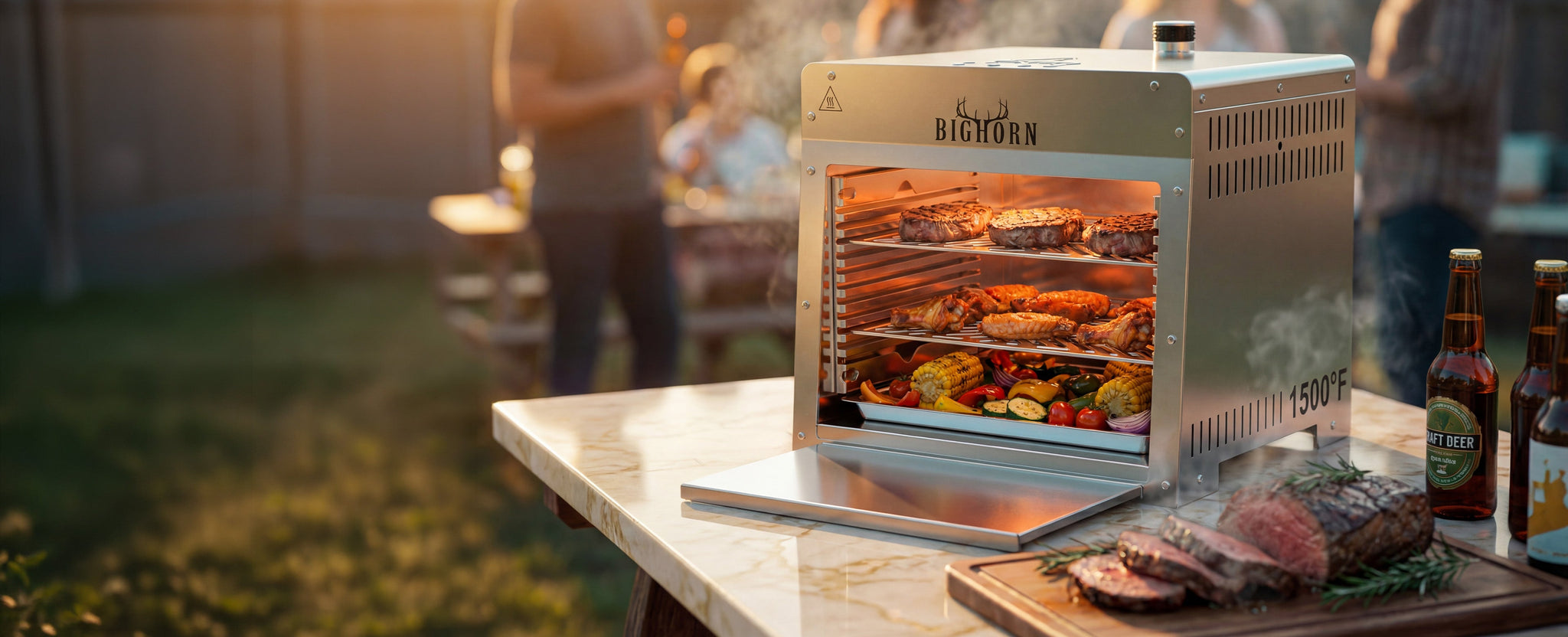
One of the most useful things you can add to an outdoor kitchen is not another appliance. It is clear counter space immediately beside the grill or oven.
You need somewhere to place trays, utensils, ingredients and finished food without carrying everything back into the house.
Even a modest counter can dramatically improve how enjoyable the space is to use.
Keep Raw and Cooked Food Organized
If there is enough counter space, mentally divide it into preparation and serving zones.
Keeping uncooked ingredients separate from finished food makes outdoor cooking easier and helps reduce cross-contamination.
Plan the Route From the Indoor Kitchen
Unless the outdoor space includes a refrigerator, sink and complete storage system, you will still make trips inside.
Think about the path between the indoor kitchen and outdoor cooking area.
A grill located just outside the kitchen or pantry is often more convenient than one placed at the opposite end of the yard simply because that location looks attractive in a plan.
Do Not Isolate the Cook
Outdoor cooking is usually social.
If the grill faces a wall while everyone else sits behind the cook, the layout can feel surprisingly disconnected.
Whenever possible, orient the preparation or cooking area so the person cooking can still participate in the conversation.
Create a Landing Zone
Every outdoor kitchen benefits from a place to set things down immediately.
Think about arriving outside carrying a tray of ingredients, drinks and utensils. There should be a clear surface available before you start opening appliances or moving furniture.
A Pizza Oven Changes the Workflow
Pizza preparation requires more counter space than many people initially expect.
You may need room for dough, flour, toppings, a peel and finished pizzas in addition to the oven itself.

Choose the Right Pizza Oven Fuel
Wood, pellets, gas and electricity all create different cooking experiences.
Solid fuel appeals to people who enjoy tending a live fire. Gas offers easier ignition and direct adjustment. Electric ovens can make sense where flame-based cooking is restricted or where simplicity is the priority.
The best option is the one you will actually feel comfortable firing up regularly.
Portable Equipment Can Be Smarter Than Built-In
A permanent outdoor kitchen looks impressive, but it is not automatically the right choice.
Portable pizza ovens, grills and prep carts give you flexibility and are easier to replace as equipment changes.
This can be especially useful if you rent, expect to move or are still learning how you use the outdoor space.
Build Permanently Only When the Layout Is Proven
If possible, live with a temporary arrangement before committing to permanent cabinetry and utility connections.
You may discover that the grill should move several feet, the seating interrupts circulation or the afternoon sun makes one part of the patio uncomfortable.
Those lessons are inexpensive to address before construction begins.
Think in Zones
A practical outdoor cooking space usually includes several zones:
- Cooking
- Preparation
- Serving
- Storage
- Dining
- Conversation
These areas can overlap in a small patio, but thinking about each function prevents important needs from being forgotten.
Separate Heat From Seating
Guests should not have to squeeze past a hot grill to reach their chairs.
Leave enough circulation space between cooking appliances and seating areas so people can move comfortably without entering the cook’s working zone.
Think About Smoke Direction
Wind can make an otherwise perfect grill location unpleasant.
Pay attention to the direction smoke usually travels and avoid placing a live-fire grill where smoke will repeatedly blow toward doors, windows or the main seating area.
Shade the People, Not Necessarily the Grill
Shade can make outdoor cooking much more comfortable, but grills and live-fire appliances require specific clearance from roofs, awnings and combustible structures.
Rather than placing a grill underneath an unsuitable cover, consider shading the nearby prep and dining areas while keeping the cooking appliance in an appropriately ventilated location.
Outdoor Kitchens Need Ventilation
Gas, charcoal, pellet and wood-burning appliances produce heat and combustion gases.
Never treat an enclosed patio like an indoor kitchen simply because it has windows or screens.
Follow the manufacturer’s required clearances and ventilation guidance for every appliance.
Fire Safety Comes Before Appearance
Outdoor kitchens often combine high heat with wood decks, furniture, landscaping and decorative structures.
Required clearances may determine the layout more than aesthetics do.
Check appliance instructions and applicable local requirements before construction.
Choose Countertops for the Climate
An outdoor countertop faces sunlight, rain, temperature changes and stains in ways an indoor counter may not.
Choose materials rated for exterior use in your climate.
Also consider whether direct sun will make a dark surface too hot to touch comfortably.
Do Not Forget Cleaning
Highly textured surfaces can look beautiful outdoors but may be difficult to wipe clean around cooking areas.
For the immediate prep zone, a smooth, durable surface is usually the more practical choice.
Add Storage Where You Use It
Outdoor storage is most helpful when it prevents repeated trips inside.
Useful items to keep near the cooking area may include:
- Grill tools
- Pizza peels
- Heat-resistant gloves
- Serving trays
- Napkins
- Outdoor-safe dishes
- Cleaning supplies
Weather-Resistant Does Not Mean Maintenance-Free
Outdoor cabinets and stainless-steel appliances still need care.
Salt air, humidity, rain and airborne debris can affect surfaces over time.
Follow the manufacturer’s cleaning instructions and address buildup before it becomes difficult to remove.
A Sink Is Useful but Not Essential
A sink can make a full outdoor kitchen much more self-contained, particularly for hand washing and light cleanup.
But plumbing adds construction cost and complexity.
If the indoor kitchen is only a few steps away, additional counter space or refrigeration may provide more everyday value.
Refrigeration Can Reduce Trips Indoors
An outdoor refrigerator can be useful for drinks, ingredients and condiments.
Make sure the appliance is specifically rated for outdoor installation rather than placing a standard indoor refrigerator outside.
Do You Really Need an Outdoor Kitchen Island?
A complete island makes sense for people who cook outside frequently and want preparation, cooking, storage and serving functions integrated into one structure.
For occasional outdoor cooks, a high-quality grill combined with a durable prep cart may provide most of the practical benefit with much less complexity.
Make the Dining Area Close but Not Too Close
The ideal dining area is near enough that serving food is easy but far enough from the grill that guests are not sitting in smoke, heat or the cook’s path.
A few thoughtful feet of separation can make the space feel dramatically more comfortable.
Use an Island as a Social Boundary
A counter or island can create a useful boundary between the cooking zone and guests.
People can sit or stand on one side while the cook works safely on the other.
Bar Seating Can Work Well in Small Spaces
If there is not enough room for a second dining table, counter-height seating can provide casual places to eat and talk without taking up as much floor area.
Leave Enough Space Behind Stools
Bar seating only works if people can pull stools out without blocking the primary walking path.
Plan circulation with chairs and stools in their occupied positions rather than only when they are tucked neatly under the counter.
Think About Lighting Before Sunset
A patio that works beautifully during the day can become frustrating after dark if the cooking surface is poorly lit.
Decorative ambient lighting is not always enough for safely checking food and using knives.
Layer Outdoor Lighting
A useful outdoor kitchen can combine:
- Task lighting over preparation areas
- Ambient lighting around dining areas
- Pathway lighting
- Landscape lighting
- Low-level accent lighting
This creates better visibility without making the entire yard feel like a floodlit workspace.
Avoid Glare Around the Grill
Very bright lights positioned directly in the cook’s line of sight can make nighttime cooking harder rather than easier.
Aim task lighting toward the work surface whenever possible.
Add a Fire Feature Only If There Is Room
A fire pit or outdoor fireplace can extend the social use of a patio beyond the meal itself.
But it introduces another heat source that needs proper clearance from furniture, structures and cooking equipment.
Do not squeeze a fire feature into a layout simply because it looks attractive in outdoor-kitchen photographs.
Separate Cooking Fire From Relaxing Fire
A live-fire grill and a social fire pit serve different purposes.
If both are included, giving them separate zones can prevent smoke, heat and foot traffic from competing in one small area.
Choose Furniture You Can Actually Maintain
Outdoor furniture should work with the climate and the amount of maintenance you are willing to do.
A beautiful dining set that requires constant covering and moving may end up being used less than a simpler, more weather-tolerant alternative.
Use Easy-Care Textiles
Cushions and fabrics near cooking areas will eventually encounter smoke, food and weather.
Removable covers and exterior-rated fabrics make outdoor entertaining much easier to manage.
Allow Space for Serving
Do not use every inch of counter for appliances.
An open surface for platters, drinks and finished food is often more valuable during a party than another permanently installed gadget.
Think About Where Guests Will Gather
People naturally congregate around the cook.
If possible, create a nearby place for them to stand or sit that does not interfere with opening the grill, retrieving ingredients or carrying hot food.
A Small Outdoor Kitchen Can Work Beautifully
A compact setup can include a grill, one generous preparation surface, storage underneath and a nearby dining table.
That may be all you need.
Good proportions and circulation matter more than the number of appliances.
For Small Patios, Choose Dual-Purpose Pieces
A prep cart can double as a serving station. A dining table can handle both eating and pizza preparation. Storage benches can provide seating and hold outdoor accessories.
Flexible pieces make a small space more useful.
Large Spaces Need Restraint Too
A large patio does not have to be filled with cabinetry and appliances.
Leaving open space around cooking and seating zones can make the area feel more luxurious and easier to navigate.
Create a Visual Focal Point
The focal point may be a handsome grill, a pizza oven, a large outdoor kitchen island or a fireplace.
Choose one main feature rather than allowing every appliance and decorative element to compete equally for attention.
Keep Appliances Visually Related
If several large pieces sit together, similar finishes can help the cooking area feel intentional.
Stainless steel is particularly easy to coordinate across grills, refrigerators, storage and outdoor kitchen components.
Let the Landscape Stay Part of the Experience
An outdoor kitchen should not feel like an indoor kitchen accidentally placed outside.
Preserve views, planting and open-air qualities wherever possible.
The landscape is one of the reasons outdoor cooking feels different in the first place.
Protect Equipment When It Is Not in Use
Properly fitted covers can help protect grills, pizza ovens and related equipment from dust and weather.
Always allow equipment to cool completely before covering it.
Plan for Water Drainage
Outdoor kitchen surfaces should not trap rainwater around cabinetry, appliances or electrical components.
Consider drainage before choosing permanent placement, particularly on uncovered patios.
Salt Air Needs Extra Attention
Coastal environments can be especially demanding on outdoor metals.
Regular cleaning and maintenance can help limit salt accumulation on stainless steel and other exposed components.
Make Everyday Use Easy
The best outdoor kitchen is not necessarily the one with the longest list of features.
It is the one you can decide to use on a normal Tuesday evening without turning dinner into a major production.
Easy ignition, accessible tools, nearby preparation space and simple cleanup all matter.
Do Not Design Only for Parties
If you entertain 20 people twice a year but cook for four people every weekend, design primarily for four.
Additional guests can be accommodated with temporary tables and seating when necessary.
Think About Cleanup Before You Buy
Grill trays, pizza stones, grates and grease-management systems all require different maintenance.
Before choosing an appliance, understand how it needs to be cleaned and whether you realistically want to do that after regular use.
Leave Access for Repairs
Built-in appliances should not be permanently sealed into cabinetry in a way that makes normal service impossible.
Think about future access to fuel connections, electrical components and replaceable parts.
Outdoor Appliances Eventually Change
An outdoor kitchen may last longer than the grill installed inside it.
If building permanently, consider whether a future replacement appliance can reasonably fit the opening.
Start Simple and Add What You Miss
You do not have to complete an outdoor kitchen all at once.
Begin with the main cooking appliance, preparation space and comfortable seating.
After using the area for a season, it will become much clearer whether you genuinely need refrigeration, a sink, additional storage or another type of cooker.
Explore Outdoor Cooking Equipment
We feature Big Horn Outdoors grills, pizza ovens and outdoor cooking equipment on Blue Sky Luxury Living, with options ranging from portable cooking equipment to larger outdoor kitchen setups.
Build Around the Experience, Not the Appliance List
A successful outdoor cooking space makes it easy to cook, talk, serve food and enjoy being outside.
Start with the way you live, give yourself enough preparation space and resist filling every available area with equipment.
A thoughtful layout with a few well-chosen pieces will usually be more enjoyable than an elaborate kitchen that is inconvenient to use.