
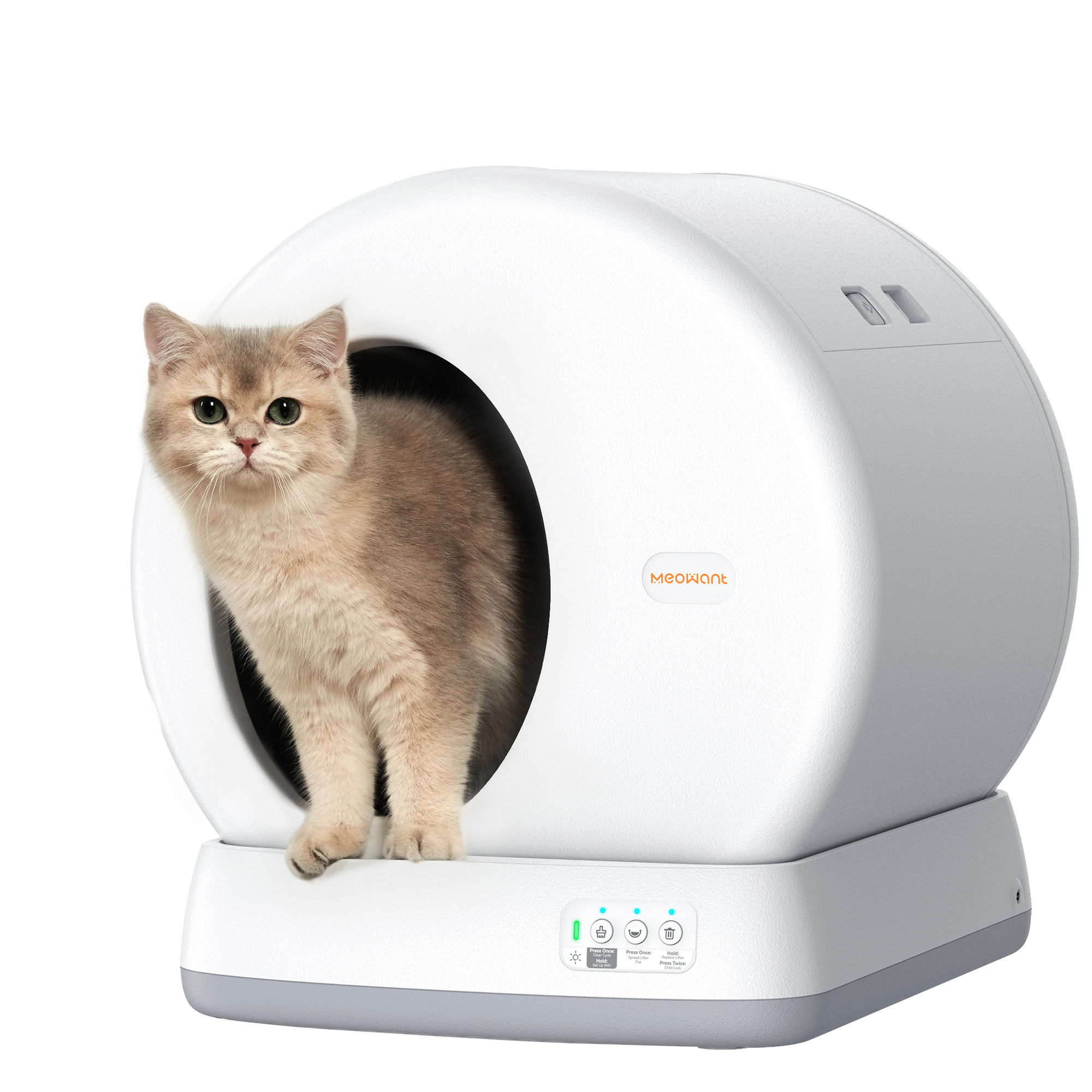
A self-cleaning litter box can reduce one of the most repetitive parts of cat care, but not every automatic model is right for every household. Size, litter type, entry height, sensor design, waste-bin capacity and how your cat responds to the machine all matter.
The best choice is usually the one that fits your cat comfortably and makes maintenance easier without making the litter routine more complicated.
Start With Your Cat’s Size
Before comparing apps and automatic features, check the internal dimensions of the litter box.
A cat should be able to enter, turn around and position comfortably. This becomes especially important for larger cats and multi-cat households.
Do not judge size only by the exterior dimensions. Automatic litter boxes contain motors, waste compartments and rotating mechanisms that can reduce the actual usable interior space.
Check the Weight Recommendation
Many automatic litter boxes use weight sensors as part of their safety system and activity tracking.
Make sure your cat falls within the manufacturer’s recommended weight range. Very small kittens may not reliably trigger the same sensors as an adult cat.
Follow the manufacturer’s minimum-age guidance before allowing a kitten to use an automatic cleaning cycle unsupervised.
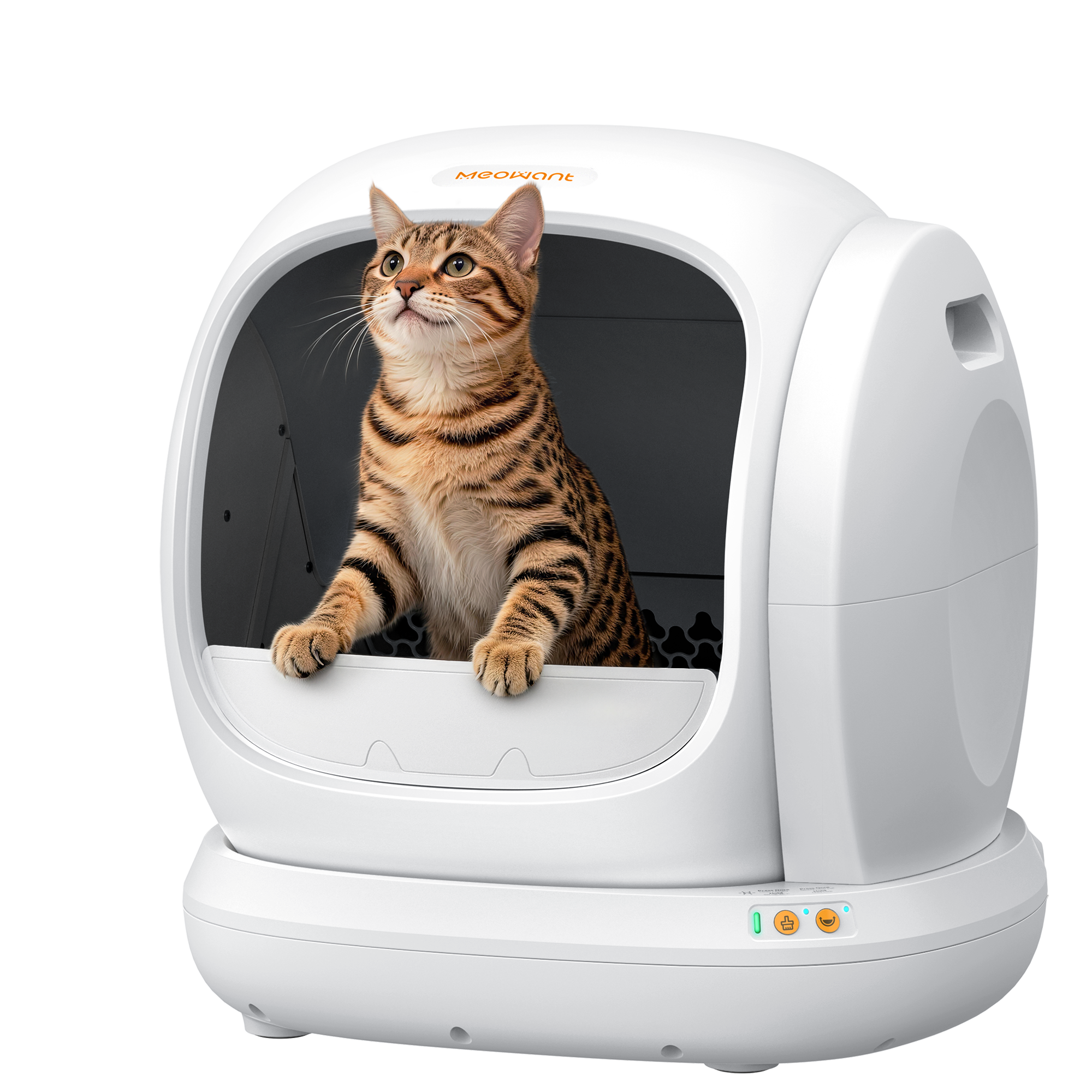
Consider the Entry Height
Entry height can make a major difference for kittens, older cats and pets with limited mobility.
A lower entrance may be easier for a cat that does not like climbing into a tall enclosed unit.
If your cat already hesitates around high-sided conventional litter boxes, a low-entry automatic model may be the better starting point.
Enclosed or Open-Top?
Some cats prefer the privacy of an enclosed litter box, while others feel more comfortable in an open design.
Automatic litter boxes now come in both styles.
An enclosed unit may help contain litter and visually hide the waste area, while an open-top model can feel less restrictive for cats that dislike confined spaces.
Do Not Ignore Litter Compatibility
Automatic litter boxes rely on screens or sifting mechanisms that separate clumped waste from clean litter.
That means litter type matters.
Many models work best with clumping bentonite, tofu or mixed litter in a specific granule-size range. Large pellets and non-clumping litter may not pass through the internal screen correctly.
Always check the manufacturer’s current recommendations before buying several bags of litter.
Think About Waste-Bin Capacity
The waste drawer determines how often you still need to interact with the litter box.
A larger bin can be useful for multi-cat homes or households where the owner does not want to empty the unit every day.
Capacity estimates should be treated as approximate because actual usage depends on the number and size of cats and how frequently they use the box.
Safety Sensors Matter
Automatic litter boxes should detect when a cat is inside or close to the unit and stop or delay movement accordingly.
Look for systems that use multiple sensors rather than relying on one detection method.
The unit should also be placed on a hard, level surface so weight sensors can function correctly.
Look at the Cleaning Cycle
Some automatic litter boxes rotate after each visit, while others wait for a set period before beginning the cleaning cycle.
A delay gives clumping litter time to form before waste is separated from clean litter.
The cleaning cycle should also be quiet enough that it does not frighten a cat that is still adapting to the device.
Noise Can Affect Acceptance
Cats vary in how they respond to mechanical sounds.
A quiet automatic litter box may be easier to introduce than a machine with an abrupt or loud cleaning cycle.
During the first few days, it can be helpful to leave automatic cleaning disabled and trigger the cycle manually when the cat is elsewhere.
App Features Can Be Useful
Smart litter boxes often include app features such as:
- Usage history
- Cleaning-cycle status
- Waste-bin reminders
- Weight tracking
- Notifications
- Remote cleaning controls
These features can make maintenance more convenient, but they should not be the only reason to choose a particular model.
Health Tracking Has Limits
Usage logs can help an owner notice that a cat is visiting the litter box more or less often than usual.
That information can be useful, but an app cannot diagnose a medical problem.
Persistent changes in urination, bowel movements, straining, avoidance or other unusual behavior should be discussed with a veterinarian.
Multi-Cat Tracking
Some app-connected litter boxes attempt to distinguish between several cats by weight.
This works best when the cats have clearly different weights. Cats of similar size may be difficult for the system to distinguish accurately.
For a multi-cat household, capacity and overall comfort are usually more important than relying completely on automatic identification.
Odor Control Is More Than One Feature
Automatic waste separation can help because clumps are moved away from the clean litter after use.
Some models also use enclosed waste drawers, deodorizing systems or replaceable odor-control components.
None of these features eliminates the need to empty and clean the unit regularly.
Self-Cleaning Does Not Mean Maintenance-Free
An automatic litter box still needs routine care.
You may need to:
- Empty the waste drawer
- Add fresh litter
- Clean the interior liner
- Wipe sensors
- Replace bags
- Replace deodorizing components
- Inspect moving parts
The easier those tasks are, the more practical the machine will be over time.
Check the Cost of Replacement Supplies
The initial litter-box price is not the only expense.
Replacement liners, filters, deodorizing products and specialized litter can add to long-term ownership costs.
Before purchasing, check whether the model requires proprietary accessories or works with common household alternatives.
Consider Wi-Fi Requirements
Some smart pet products connect only to specific Wi-Fi bands or require an internet connection for certain features.
If app monitoring matters to you, check network compatibility before deciding where the litter box will be placed.
Choose the Location Carefully
A good location should be quiet, accessible and large enough to allow the cat to enter easily.
You also need enough space to open or remove the waste drawer and perform cleaning.
Avoid squeezing the machine into a tight corner where maintenance becomes difficult.
Keep Food and Water Separate
Cats generally prefer litter areas away from food and water.
Even if a smart litter box controls odor well, separating these areas can make the environment more comfortable for the cat.
Plan for a Transition Period
Do not assume your cat will immediately understand or trust a new automatic litter box.
Keep the old box available while introducing the new one.
You can place some familiar clean litter in the automatic box and allow your cat to investigate it before enabling automatic cleaning.
Do Not Force the Cat
Putting a reluctant cat inside the machine can make the transition harder.
Allow the cat to approach on its own and reward calm exploration if appropriate.
Some cats adapt in a day, while others may need considerably longer.
Watch How Your Cat Reacts to the Cleaning Cycle
Once the cat is using the box consistently, gradually introduce the automatic cycle.
If the movement or sound causes fear, temporarily return to manual operation and allow more time for adjustment.

Measure Before You Buy
Automatic litter boxes can be much larger than conventional litter trays.
Measure:
- Overall width
- Depth
- Height
- Drawer clearance
- Entrance clearance
- Distance to the nearest outlet
Do not rely only on product photography to judge scale.
Think About Cleaning Access
The machine may fit physically in a space but still be difficult to maintain if you cannot comfortably remove the waste drawer or open the main compartment.
Leave enough surrounding room for routine cleaning.
Check the Warranty and Return Policy
A self-cleaning litter box contains motors, electronics and sensors, making warranty terms more important than they are for a conventional plastic tray.
Review warranty length, replacement-part availability and return conditions before ordering.
When a Self-Cleaning Litter Box Makes Sense
An automatic litter box may be particularly useful for:
- Busy cat owners
- Multi-cat households
- People who want fewer daily scooping tasks
- Owners who value app-connected monitoring
- Homes where better waste containment is desirable
When a Traditional Box May Be Better
An automatic model is not automatically the best solution for every cat.
A traditional litter box may remain preferable for a cat that is frightened by mechanical movement, cannot comfortably enter the machine or requires a litter type that is incompatible with automatic sifting.
Choose for the Cat First
The best smart pet product is one the animal is comfortable using.
App features, attractive design and automatic cleaning are valuable only if the cat reliably uses the litter box.
Explore Meowant Smart Pet Care
If you are considering an automatic litter box, visit the Meowant product page at Blue Sky Luxury Living to learn more about Meowant’s self-cleaning litter boxes and broader smart pet-care collection.