
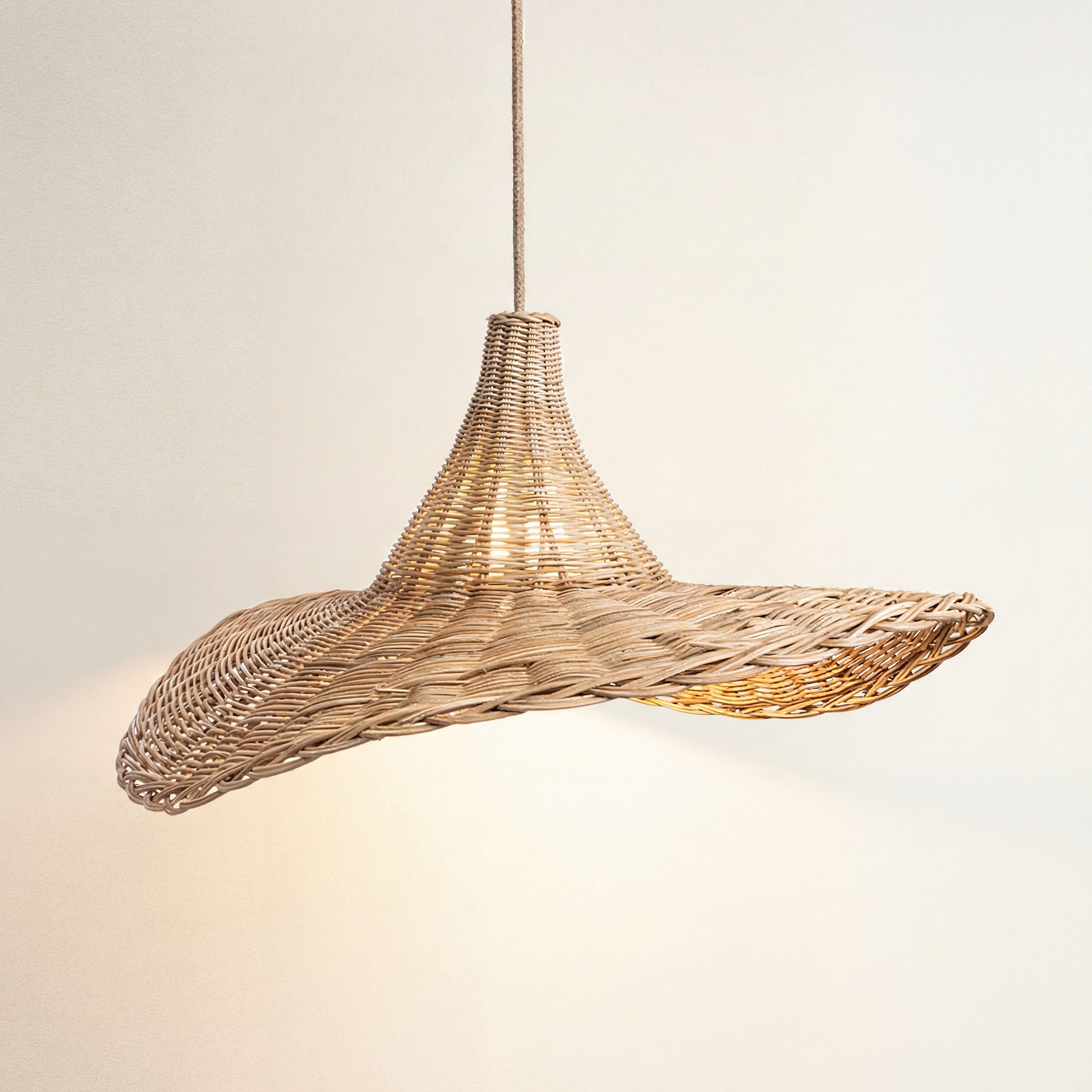
Rattan lighting has a way of making a room feel warmer almost instantly. The woven texture softens smooth walls, stone counters, painted cabinetry and other hard surfaces while bringing in a natural element that still feels polished.
But there is a difference between adding a beautiful rattan pendant and turning an entire room into a theme. The most sophisticated spaces usually let woven lighting play one clear role within a broader mix of materials.
Here is how to decorate with rattan lighting while keeping the finished room balanced, modern and intentional.
Start With One Strong Rattan Feature
If you are introducing rattan into a room for the first time, start with one focal fixture rather than several competing woven pieces.
A large pendant above a dining table, a sculptural light in the living room or a pair of smaller pendants over a kitchen island can provide plenty of natural texture on their own.
Once the fixture is in place, look at the rest of the room before adding rattan baskets, chairs, mirrors and accessories. You may find that the light already provides exactly the amount of woven texture the space needs.
Think Organic Modern Rather Than Beach House
Rattan is often associated with coastal interiors, but the material is far more versatile than that.
One of the easiest ways to make woven lighting feel contemporary is to pair it with materials that do not immediately read as beach decor.
Try rattan with:
- Natural stone
- Warm white plaster or painted walls
- Walnut or oak
- Black metal
- Brushed brass
- Linen upholstery
- Concrete
- Simple wool rugs
The contrast keeps the room from becoming overly literal and lets the texture of the fixture stand out.
Choose the Shape Before the Material
It is easy to become focused on the beauty of the weave and forget that a pendant is also a substantial architectural object.
Look first at the silhouette.
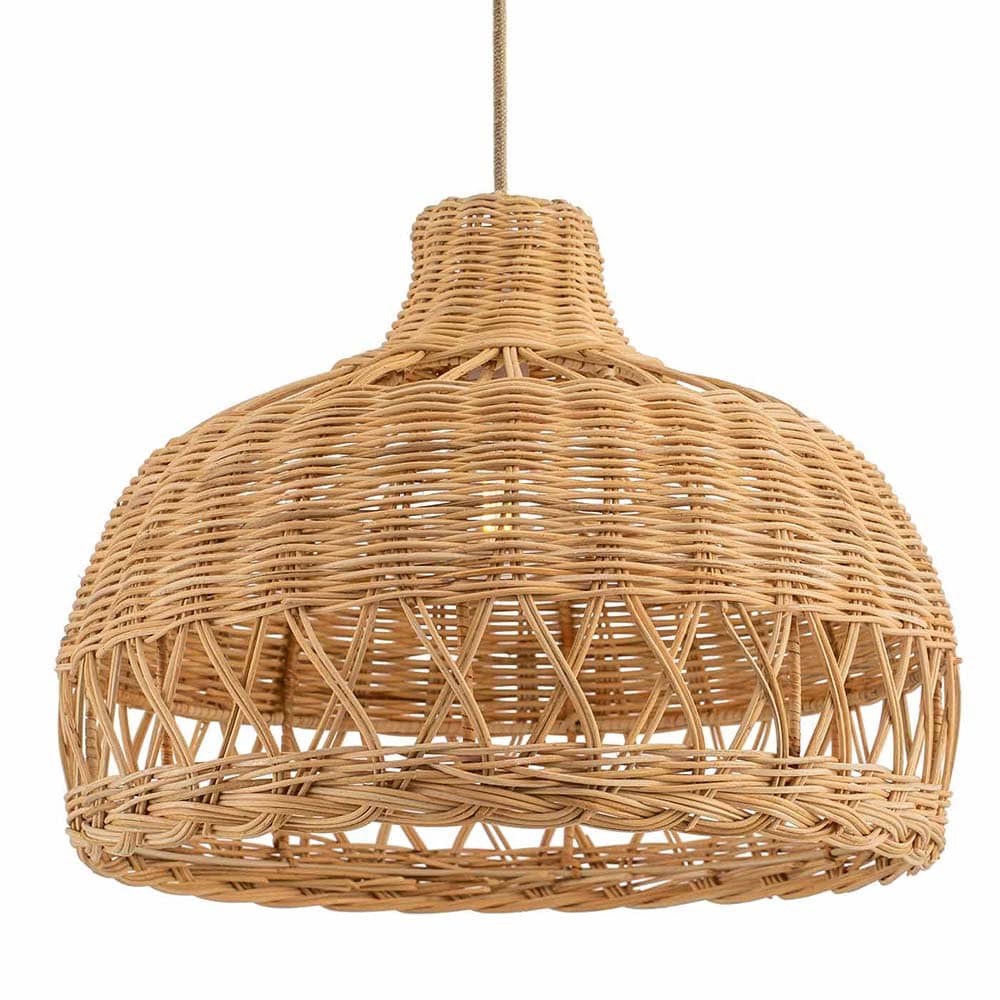
A broad, shallow pendant creates a completely different feeling from a tall narrow basket shape. An airy open weave will also feel visually lighter than a dense shade of the same dimensions.
The fixture should make sense with the proportions of the room before you consider whether the rattan itself is beautiful.
Scale Matters More Than You Think
One of the most common lighting mistakes is choosing a fixture that is too small.
A pendant may look large in an isolated product photograph but appear surprisingly insignificant once it is hanging above a long dining table or large kitchen island.
Measure the furniture underneath the fixture and consider the scale of the entire room.
Large rooms with high ceilings can usually support considerably more visual weight than people expect.
Use Rattan to Soften a Modern Kitchen
Kitchens contain a lot of hard surfaces: stone, tile, metal, glass and painted cabinetry.
That makes them especially good places for woven lighting.
A rattan pendant can introduce texture without requiring another color or patterned surface.
In an otherwise streamlined kitchen, the contrast can make the room feel warmer while preserving its clean architecture.
One Large Pendant or Several Smaller Ones?
Both approaches can work above an island.
Several smaller pendants create rhythm and symmetry, while one oversized fixture can feel more sculptural and unexpected.
The right choice depends largely on the island’s length and whether there are other strong visual elements nearby.
If the backsplash, stone or cabinetry is already dramatic, simpler lighting may create better balance.
Rattan Works Beautifully in Dining Rooms
A dining table gives a pendant a natural visual anchor.
The fixture helps define the dining area, particularly in open-plan homes where living, kitchen and dining spaces flow into one another.
Because diners will see the pendant from relatively close range, woven materials can be particularly effective here. The texture becomes part of the room rather than simply disappearing into the ceiling.
Keep Sightlines Open
A beautiful pendant becomes frustrating if everyone has to look around it during dinner.
When hanging a fixture over a table or island, consider both its bottom edge and its widest point.
The goal is to bring the fixture low enough that it feels connected to the furniture below without obstructing conversation or views across the room.
Let the Weave Create the Pattern
Rattan already contains plenty of visual movement.
For that reason, woven lighting often looks strongest against relatively quiet backgrounds.
You do not necessarily need patterned wallpaper, a heavily patterned rug and a collection of busy accessories in the same area.
Allow the weave itself to act as one of the room’s patterns.
Mix Rattan With Refined Materials
Pairing natural fibers with more polished materials is one of the easiest ways to keep them sophisticated.
A woven pendant above a marble table, for example, creates a very different effect from the same fixture surrounded by wicker furniture and nautical accessories.
The contrast between relaxed and refined materials is what often gives organic-modern interiors their depth.
Do Not Match Every Natural Material
Your rattan light does not need to match the exact shade of your wood floor, dining table or cabinetry.
Natural materials rarely match perfectly in nature, and interiors generally look more interesting when their tones are related rather than identical.
A pale woven fixture can work with medium oak, darker walnut or even painted furniture.
Combine Rattan With Black
Black details are particularly effective for giving woven lighting a more contemporary edge.
Black window frames, cabinet hardware, dining chairs or small metal accents can provide enough contrast to make natural rattan feel architectural rather than rustic.
Use Warm Whites Instead of Stark Whites
Rattan usually looks especially good against warm white, ivory, cream and soft neutral walls.
These shades relate naturally to the warm undertones in the fiber while still giving the fixture enough contrast to stand out.
A stark cool white can work too, but the result tends to feel sharper and more contemporary.
Try Rattan in the Bedroom
Bedrooms are another natural place for woven lighting because the material adds softness without taking up floor or tabletop space.
A pendant can replace a conventional bedside lamp, particularly when suspended over a nightstand.
This also makes a small bedside table more functional by leaving its surface free.
Keep the Rest of the Bedroom Quiet
If the fixture has a complex open weave or dramatic silhouette, let it be the decorative moment.
Simple linen bedding, understated furniture and a restrained color palette can make the natural texture feel more luxurious.
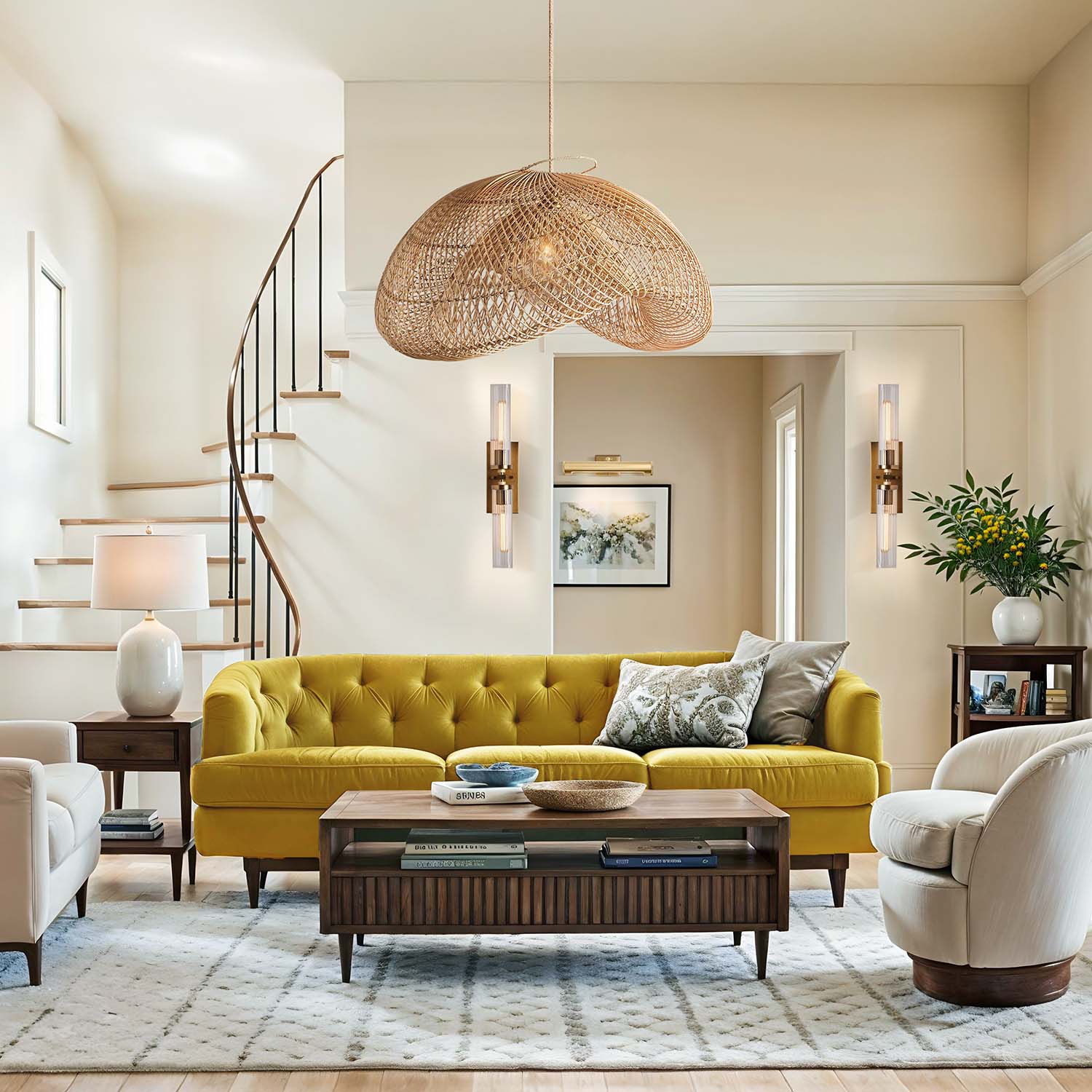
Use Lighting to Add Texture to a Neutral Living Room
Neutral interiors can sometimes look flat even when every individual piece is beautiful.
The missing element is often texture rather than color.
Woven lighting provides texture at eye level and above, which helps create visual interest throughout the vertical space instead of concentrating everything around the furniture.
Layer the Lighting
A pendant should not have to provide every type of light a room needs.
Combine it with table lamps, floor lamps, sconces or discreet architectural lighting so each source has a specific job.
This also allows a decorative woven pendant to be chosen primarily for atmosphere instead of requiring it to flood the entire room with light.
Pay Attention to the Bulb
The bulb has a major effect on how woven lighting appears after dark.
Very cool light can make natural fibers look washed out, while warmer light generally enhances their golden and brown tones.
Also consider whether the bulb itself is visible through the weave. A decorative bulb may be appropriate in an open fixture, while a less attractive bulb can become unexpectedly prominent.
Open Weaves Create Interesting Shadows
One of the most beautiful characteristics of a woven pendant is the way light escapes through the material.
Open weaves can cast patterns across nearby walls and ceilings, adding another decorative layer after sunset.
That effect is worth considering when deciding where the fixture will hang.
Use Dimmers When Compatible
If the fixture and bulb support dimming, it can greatly increase the usefulness of decorative lighting.
Brighter light may be practical during meals or food preparation, while a lower setting creates a more intimate atmosphere later in the evening.
Avoid a Full Matching Set
A room rarely needs a rattan pendant, matching rattan sconces, matching rattan lamps and matching woven furniture.
Instead, think in terms of complementary materials.
If the pendant is woven, the nearby lamp might be ceramic. A wall sconce might be brass or black metal. This keeps the room collected rather than coordinated to the point of feeling staged.
Repeat the Material Subtly
While you do not need a matching set, repeating a natural fiber once elsewhere can help the pendant feel intentional.
A small woven tray, the seat of a dining chair or a natural-fiber basket may be enough.
The repetition should be noticeable only after looking around the room rather than immediately obvious.
Think About the View From Other Rooms
In an open-plan home, a pendant is often visible from several spaces.
Before choosing a dramatic fixture, consider what will appear behind it when viewed from the kitchen, living room or entry.
A sculptural rattan pendant can create a beautiful focal point when those longer sightlines are considered deliberately.
Do Not Forget Ceiling Height
High ceilings can support larger or more vertically dramatic fixtures.
Lower ceilings generally need shallower silhouettes or flush and semi-flush designs that preserve comfortable circulation underneath.
Always consider the total hanging height, not simply the diameter of the shade.
Natural Variation Is Part of the Look
Rattan and other plant-based fibers naturally vary in color, thickness and texture.
That irregularity is part of what distinguishes woven lighting from molded synthetic fixtures.
If absolute uniformity is important to the design, natural rattan may not be the right material.
Rattan Does Not Have to Mean Rustic
The surrounding architecture determines much of how a material reads.
Place a woven pendant in a room with contemporary cabinetry, clean-lined furniture and restrained accessories, and it can feel thoroughly modern.
The same pendant surrounded by distressed wood and vintage accessories may feel more rustic.
Use It Where Texture Is Missing
The best reason to choose rattan lighting is not because it is currently popular. It is because the room needs the texture.
Look at what is already there.
If most surfaces are smooth, solid and hard, a woven fixture can be transformative. If the room already includes lots of cane furniture, patterned textiles and woven accessories, another rattan piece may not add anything new.
Keep Trends Secondary
Natural woven lighting has moved through many design trends, from traditional tropical interiors to contemporary organic-modern homes.
Choosing a simple silhouette in a natural material generally gives a fixture more longevity than selecting an extremely trend-specific shape solely because it is popular at the moment.
Choose a Fixture You Would Still Like Without the Trend
A good test is to imagine the same pendant several years from now.
If you love its proportions, texture and craftsmanship independently of current design trends, it is much more likely to remain a satisfying choice.
Explore Different Rattan Lighting Styles
There is much more variety in woven lighting than the traditional basket-shaped pendant. Shapes range from broad architectural forms to compact sculptural designs, allowing rattan to work in both relaxed and highly contemporary rooms.
We feature several examples from Rowabi’s rattan and modern lighting collection on Blue Sky Luxury Living, including pendant designs that demonstrate how differently the same natural material can be interpreted.
The Simplest Rule: Let It Be Special
Rattan lighting works best when it has room to be noticed.
Choose a fixture with the right scale, surround it with complementary rather than matching materials and resist the urge to repeat woven texture everywhere.
One beautiful natural fixture can provide all the warmth a room needs.