
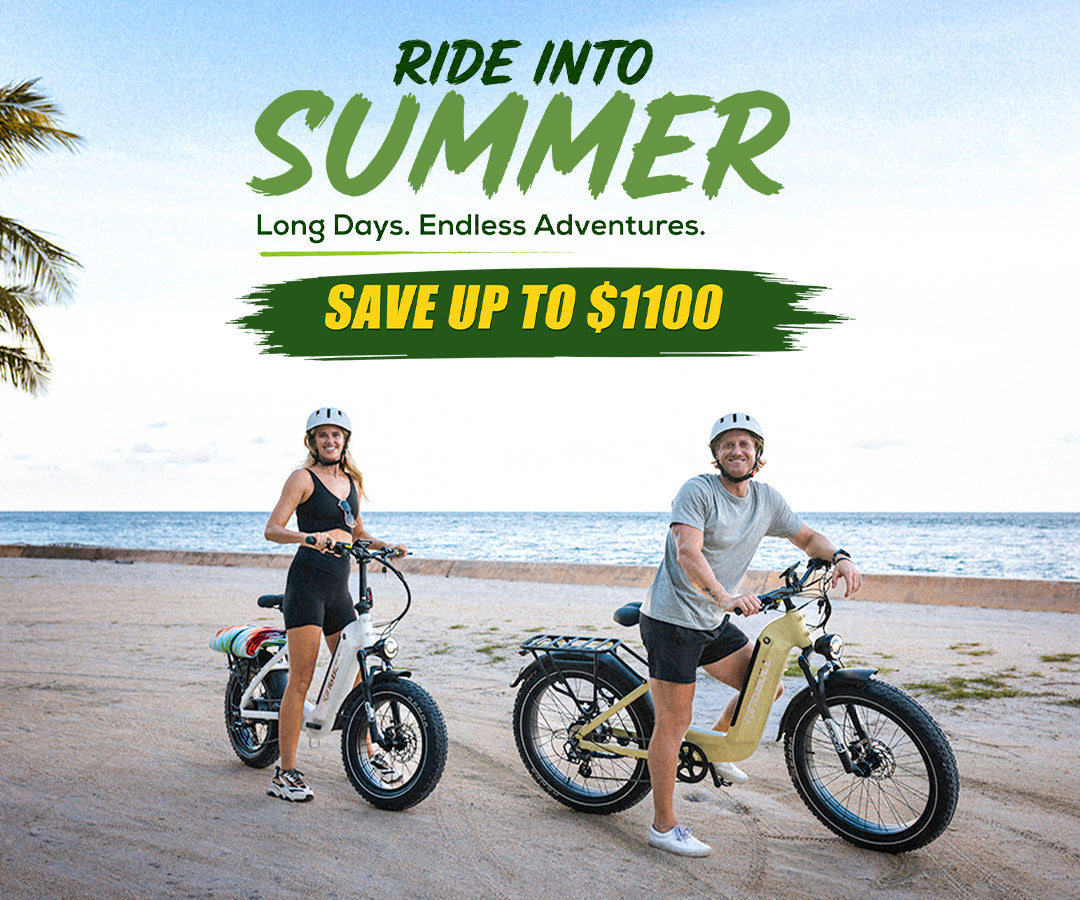
Electric bikes can serve very different purposes. One rider may want a practical alternative for commuting to work, another may need space for groceries and gear, while someone else may be looking for a bike that can handle gravel roads and weekend adventures.
That is why choosing an e-bike based only on motor power or maximum range can be misleading. The right bike is the one that fits your actual routes, storage space, cargo needs and riding habits.
Kingbull offers folding, cargo and all-terrain fat-tire electric bikes, which makes the lineup a useful example of how different designs suit different kinds of riders. Current models include the Literider 2.0 folding bike, Voyager 2.0 cargo bike, Hunter 2.0S and Ranger all-terrain models.
Start With How You Will Actually Use the Bike
Before comparing batteries and motors, identify the trips the bike needs to handle most often.
A daily commuter may prioritize reliability, lights, fenders and a rear rack. Someone living in an apartment may care much more about folding dimensions and storage. A rider carrying groceries or equipment should look closely at payload and rack capacity, while recreational riders may prioritize tire size and suspension.
Buying for realistic everyday use usually leads to a better choice than selecting the bike with the largest specification numbers.
Think About Your Daily Distance
Battery range is one of the first specifications shoppers compare, but advertised maximum range should be treated as a reference rather than a guaranteed everyday number.
Kingbull itself notes that real-world range can be affected by rider weight, terrain, wind and temperature, and recommends choosing a commuter bike with more battery capacity than the exact distance required for the commute.
A useful approach is to calculate the total round-trip distance you expect to ride and leave a comfortable reserve. That gives you more flexibility when conditions are less efficient than expected.
Understand What Reduces Electric Bike Range
Several factors can reduce how far an e-bike travels on one charge:
- Steep or repeated hills
- Higher pedal-assist levels
- Frequent throttle use
- Heavy riders or cargo
- Strong headwinds
- Cold temperatures
- Low tire pressure
- Frequent stops and starts
This means two riders using the same bike can experience noticeably different ranges.
Choose a Folding Bike When Storage Matters
A folding electric bike can be useful when the bike needs to fit into a smaller home, garage, RV or vehicle.
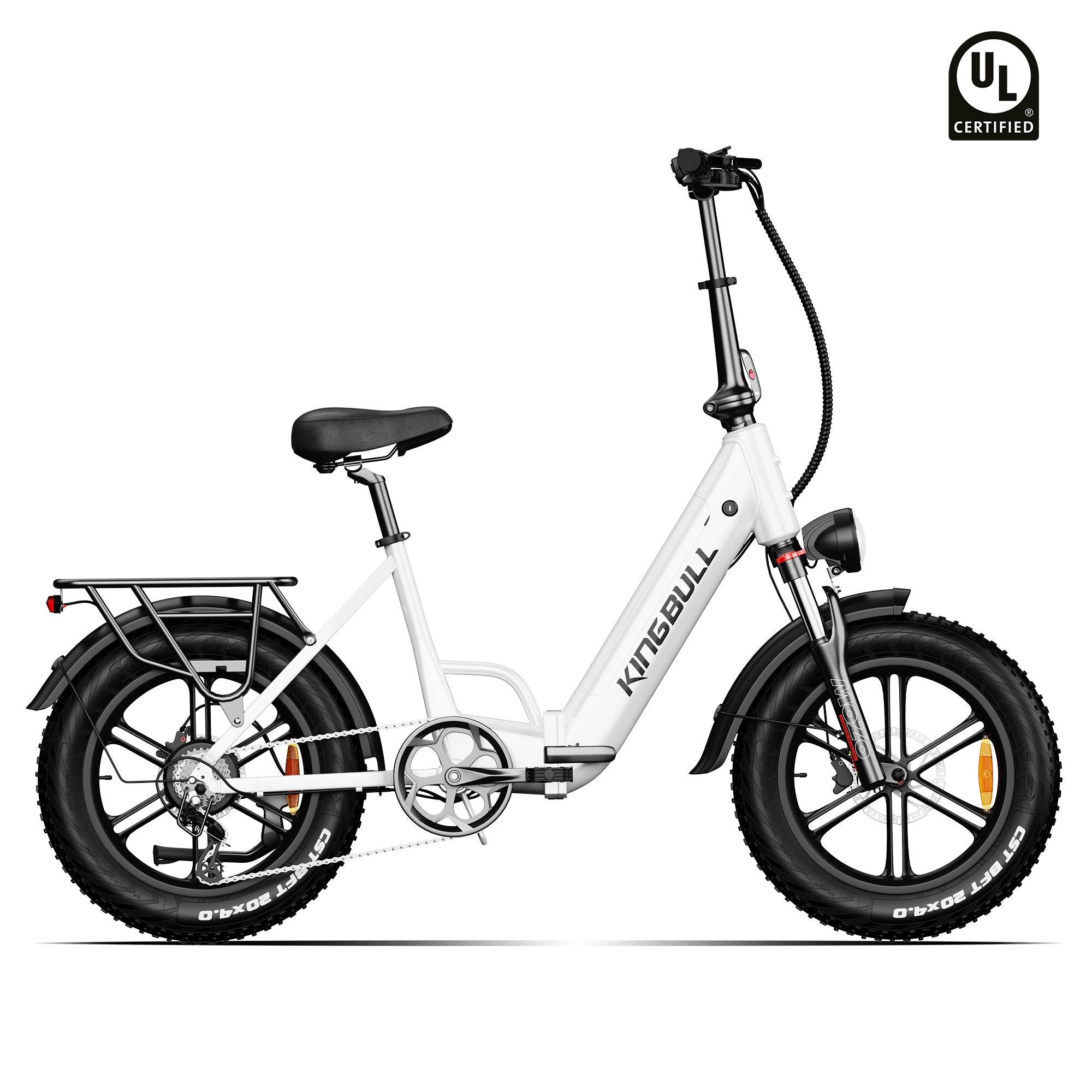
Kingbull’s Literider line combines a folding step-through frame with 20-inch fat tires. The current Literider 2.0 is designed for commuting, travel and mixed terrain, while the broader folding collection also includes longer-range options.
Do Not Confuse Folding With Lightweight
Folding makes a bike more compact, but it does not necessarily make it easy to carry. Electric bikes contain a motor, battery, substantial frame and often larger tires than conventional folding bicycles.
Before purchasing, check the actual bike weight and think about whether you will need to lift it into a vehicle, carry it upstairs or move it regularly through a building.
If your route requires carrying the bike frequently, weight may be just as important as the folding mechanism.
Consider a Cargo E-Bike for Everyday Utility
Cargo e-bikes can make sense for people who want to replace some short car trips with bike trips. Groceries, work equipment and other everyday items can be carried more easily when the bike has a reinforced frame and appropriate rear rack.
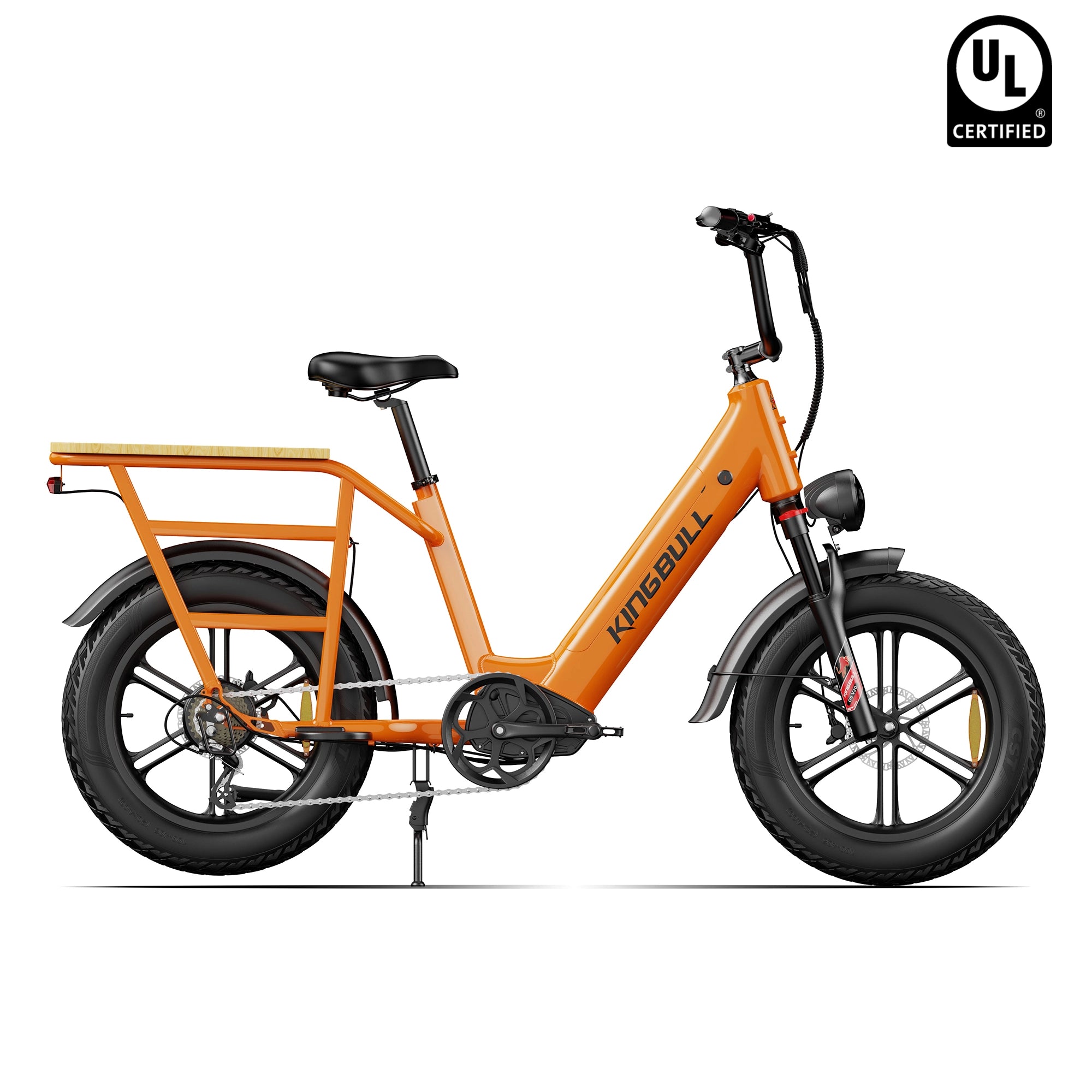
The Kingbull Voyager line is designed specifically around commuting and cargo. Current Voyager specifications emphasize a substantial payload capacity and an integrated rear rack alongside electric assistance.
Check Payload Capacity Carefully
Payload capacity includes more than the items placed on a rear rack. The total usually includes the rider, cargo and accessories.
A bike with a high total payload rating can still have a separate, lower limit for the rear rack itself. Always review both specifications before loading groceries, equipment or other heavy items.
Keeping weight balanced and securely attached is also important for handling and braking.
Fat Tires Can Add Stability on Mixed Surfaces
Many Kingbull models use fat tires, often measuring approximately four inches wide. Wider tires provide a larger contact area and can offer additional stability and traction on gravel, loose dirt, sand and rough pavement.
The tradeoff is additional weight and rolling resistance. Riders who spend nearly all of their time on smooth urban pavement may value different characteristics than someone regularly riding on mixed surfaces.
Think About Wheel Size
Wheel size affects how a bike feels and handles. Kingbull’s current lineup includes compact 20-inch fat-tire bikes as well as larger 26-inch models.
Smaller wheels can contribute to a more compact frame and are common on folding bikes. Larger wheels may feel more natural over uneven terrain and are common on mountain-style e-bikes.
Neither size is universally better. Storage, rider fit and terrain should guide the choice.
Step-Through or Step-Over Frame?
Frame style can make a meaningful difference in everyday convenience.
A step-through frame has a lower central opening, which can make getting on and off the bike easier. This can be particularly useful when carrying cargo or making frequent stops.
Step-over frames have a more traditional bicycle shape and remain common on mountain and off-road designs.
Kingbull offers both configurations across its current lineup.
Match the Bike to Your Terrain
If most rides take place on paved roads, focus on commuting comfort and practicality. Riders who expect gravel, uneven paths or other rougher surfaces may benefit from wider tires, additional suspension and a frame designed for mixed terrain.
The Hunter 2.0S, for example, is positioned as an all-terrain model with 26-inch fat tires, while the Literider 2.0 combines folding convenience with smaller all-terrain fat tires.
Remember that an all-terrain bike is not automatically permitted on every trail. Local access rules still apply.
Suspension Can Improve Comfort
Suspension helps absorb some of the bumps transmitted through the front wheel or frame. It can be especially useful on broken pavement, gravel and rough recreational paths.
For smooth city streets, elaborate suspension may be less important than riding position, saddle comfort and tire pressure.
Consider where you actually ride rather than assuming more suspension is always better.
Motor Power Is Only One Part of Performance
Many current Kingbull models use 750W sustained motors, but motor wattage alone does not tell you everything about how an e-bike will feel.
Bike weight, gearing, torque, controller programming, wheel size and rider weight all influence acceleration and hill performance.
A bike that delivers smooth, predictable assistance can be more pleasant to ride every day than one chosen simply because it advertises the largest peak-power figure.
Consider How the Pedal Assist Feels
Pedal-assist systems add motor power when the rider pedals. Different bikes may use cadence sensors or torque sensors, and the riding feel can differ substantially.
A cadence sensor generally detects whether the pedals are turning, while a torque sensor can respond more directly to how much force the rider applies.
Neither approach automatically makes a bike right or wrong for a particular rider, but it is worth understanding the difference when comparing models.
Brakes Matter More on a Heavier Bike
Electric bikes are typically heavier than conventional bicycles and may travel at higher assisted speeds. Reliable braking is therefore an important part of the buying decision.
Many current Kingbull models use hydraulic disc brakes, while specifications can vary among generations and individual models.
Always review the specifications for the exact version of the bike being purchased rather than assuming all models use the same components.
Look for Practical Commuting Features
Small details often determine whether an e-bike feels convenient day after day.
Useful commuting features can include:
- Integrated front and rear lights
- Fenders for wet roads
- A sturdy rear rack
- A readable display
- A removable battery
- USB charging on selected displays
- Comfortable grips and saddle
- A stable kickstand
Kingbull’s own commuter guidance identifies lighting, fenders, racks and weather resistance as important urban considerations.
Check Rider Height and Bike Fit
E-bike specifications often include a recommended rider-height range. Treat this as an important starting point, particularly with larger fat-tire models.
Seat height, reach to the handlebars and the ability to stand comfortably over or through the frame all affect control.
If you fall near the edge of a recommended range, compare geometry and adjustment limits carefully rather than relying only on the general height recommendation.
Do Not Forget the Bike’s Physical Size
Electric bikes can look smaller in photographs than they feel in person. Fat tires, long wheelbases and integrated racks add substantial physical presence.
Before ordering, measure the space where the bike will be stored. If it will travel in a car, RV or bike rack, confirm the folded or assembled dimensions and the equipment’s weight capacity.
Understand E-Bike Classes and Local Rules
Electric bikes may be categorized into different classes based on pedal assistance, throttle operation and assisted speed. Several Kingbull models can operate in Class 2 or Class 3 configurations, depending on the model and settings.
Rules governing e-bike classes vary by location. A bike allowed on a roadway may not necessarily be permitted on every bike path or recreational trail.
Check state, county, city and trail rules before riding.
Think About Battery Charging Before Buying
A removable battery can make charging more convenient when the bike itself cannot easily be brought near an electrical outlet.
Consider where the bike will be stored and where the battery will be charged. Use only compatible charging equipment and follow the manufacturer’s battery-care instructions.
Damaged batteries or chargers should not be used until they have been appropriately evaluated or replaced.
Choose for the 90 Percent of Rides You Actually Take
It is easy to buy an e-bike around an imagined extreme adventure. A more practical approach is to choose the bike that works well for the majority of your rides.
If 90 percent of your use is commuting, prioritize commuting. If the bike will spend most weekends in an RV, folding and storage may matter more. If errands and hauling are the primary goal, cargo capacity should move higher on the list.
You can still choose a versatile model, but everyday usability should come first.
Explore Kingbull Electric Bikes
Kingbull offers folding, cargo and all-terrain electric bikes for commuters, recreational riders and people looking for more practical ways to carry everyday gear.
Visit the Kingbull Electric Bikes product page at Blue Sky Luxury Living to learn more and explore the collection.